
SCHEDULE RISK & DELAY MANAGEMENT
Detect delays before they become problems
Delays rarely start when a milestone is missed.
- Identify schedule risk before delays materialize
- Anticipate near-term execution constraints
- Improve coordination across packages and interfaces
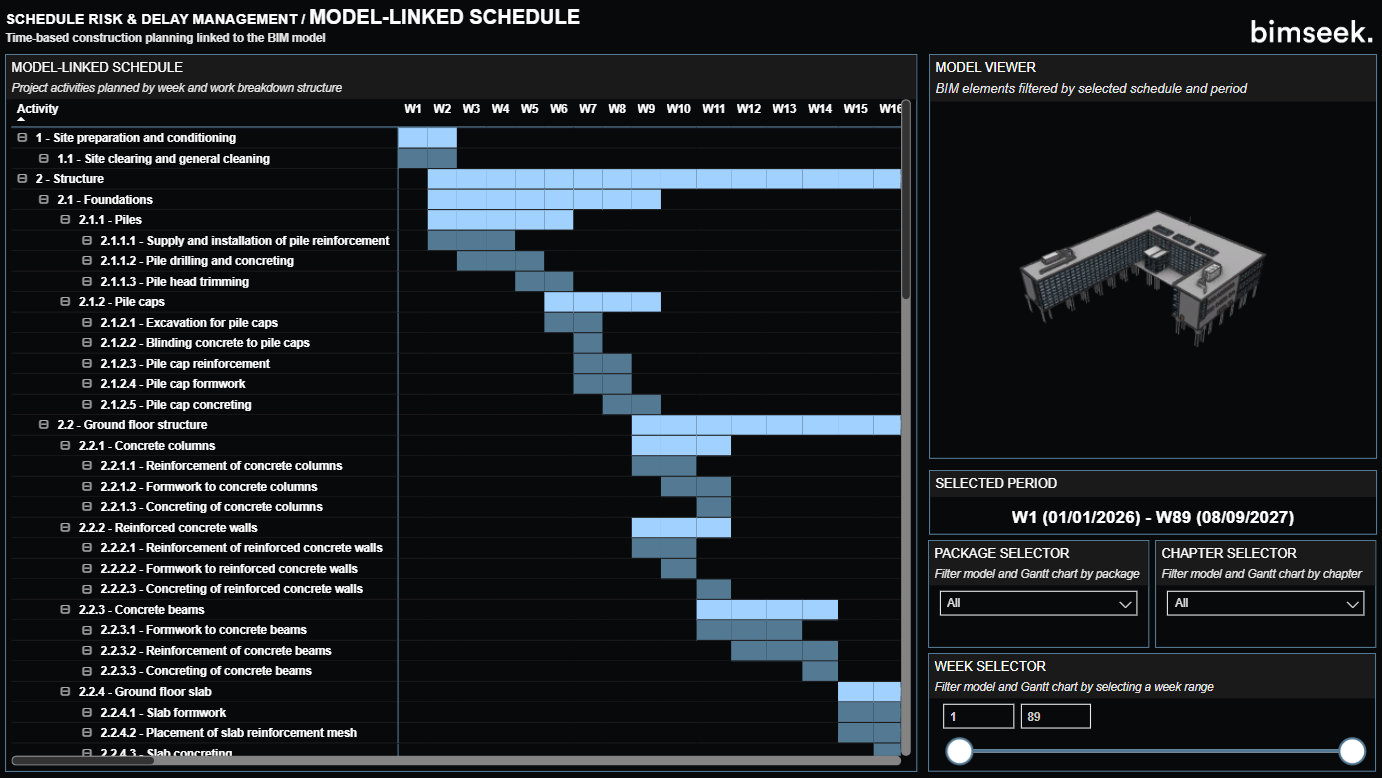
Short-Term Execution & Lookahead Risk
Short-term risk defines long-term delay.
- Most delays originate in the near term, not at the end of the schedule.
- Short-term execution monitoring reveals activity status, upcoming work and near-term constraints.
- Use near-term visibility to reduce disruption before delays accumulate.
Plan vs Reality & Delay Analysis
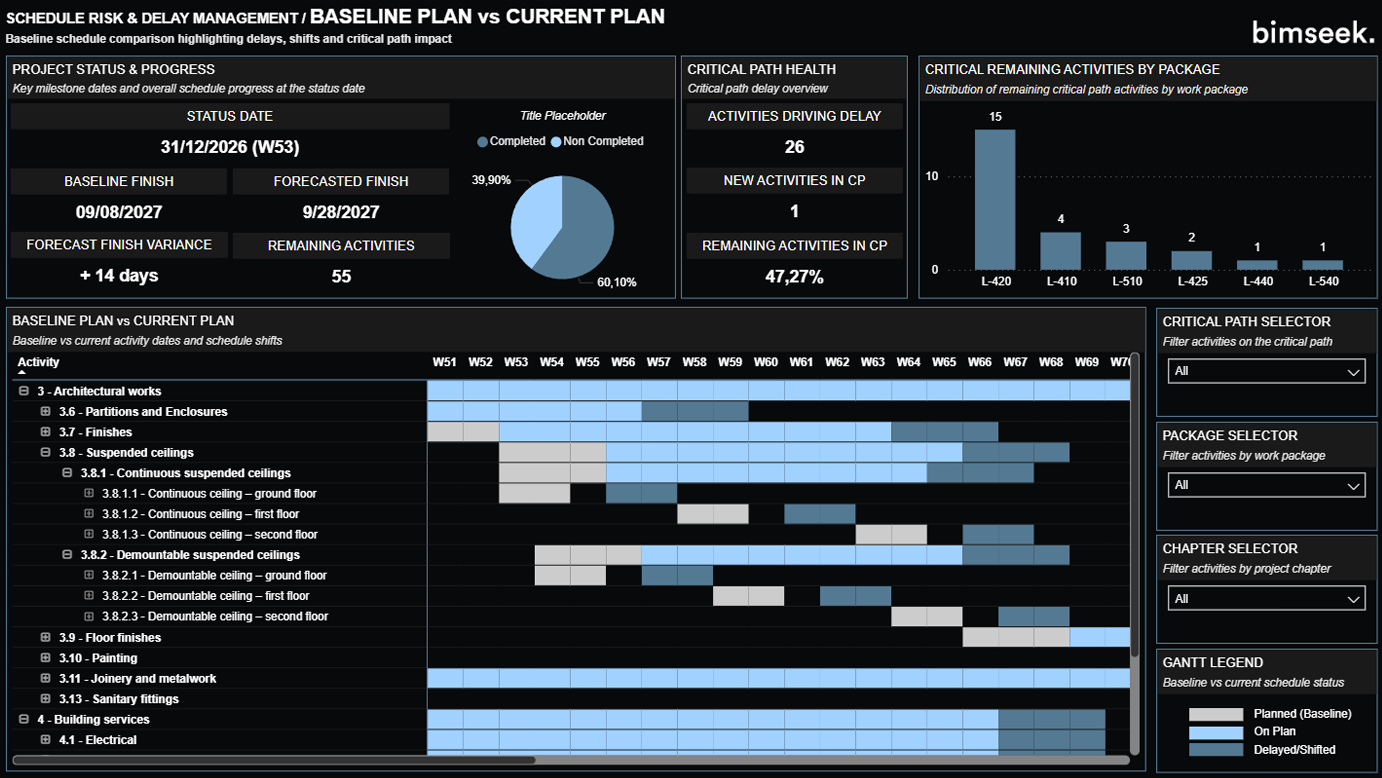
A plan only matters if reality follows it.
- A schedule only creates value if it reflects reality.
- Plan comparison reveals deviations between the baseline plan and the current execution sequence, including emerging delays.
- Use planning deviations early to protect milestones and recovery options.
Vendor & Package Coordination
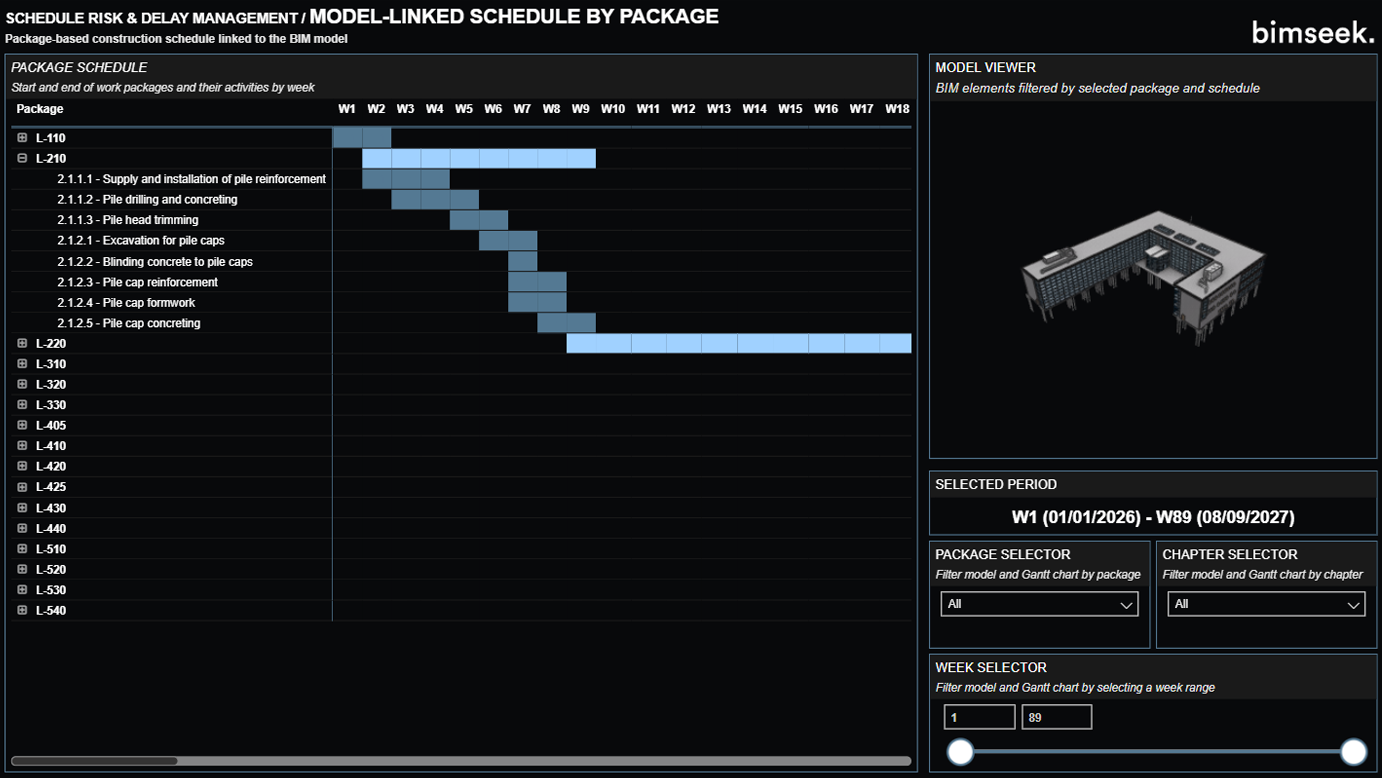
Poor coordination creates invisible delay.
- Delays often occur at interfaces, not within isolated activities.
- Package-level coordination shows how work packages interact over time and where conflicts or overlaps may occur.
- Use package-level coordination to prevent conflicts, idle time and handover delays.
Interactive sample
Test how schedule visibility helps detect delay before it impacts delivery.
- Explore the construction plan by week, activity and project area.
- Understand when each scope is planned to start, progress and finish.
- Identify sequencing conflicts and timing pressure before they become delays.
- Explore the construction plan by week, activity and project area.
- Understand when each scope is planned to start, progress and finish.
- Identify sequencing conflicts and timing pressure before they become delays.
- For the best interactive experience, explore this sample on desktop.
- Explore the construction plan by week, activity and project area.
- Understand when each scope is planned to start, progress and finish.
- Identify sequencing conflicts and timing pressure before they become delays.
- On iPad, open the interactive sample directly in Power BI: Open interactive sample
Schedule Risk & Delay Management enables proactive time
control through realistic sequencing and continuous validation.
Turn schedule data into proactive decisions.
Kill opinions. Drive data. Build better.
See how organizations prevent delays and protect completion dates.
BOOK DEMO